


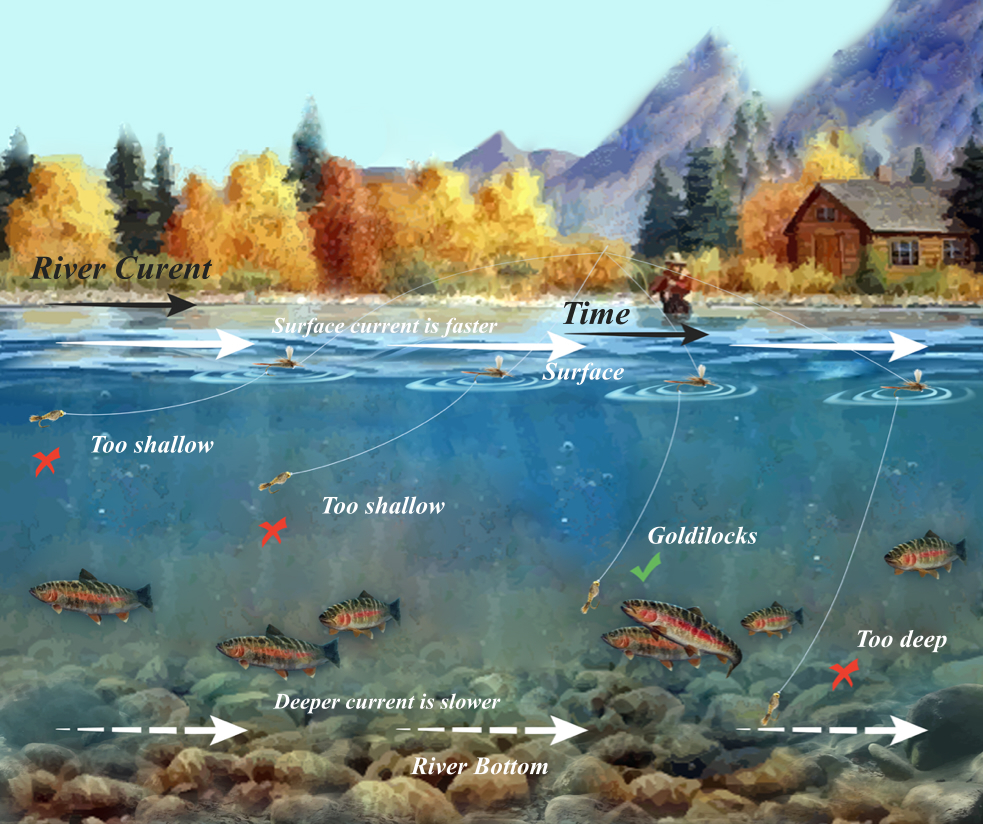
Many people have fond memories of family vacations and adventures to lakes, rivers, and oceans around the world to go fishing. However, many of those who have fished since they were kids or even fish competitively have never attempted the ancient angling technique of fly fishing.
For David Ladensohn, expert fly fisherman and author of the recent Trinity University Press book Fly Fishing with Leonardo da Vinci, fly fishing has become far more than a fun pastime. In his debut book and Tripod episode, “Leonardo da Vinci: The Master of Observation,” Ladensohn discusses the beautiful locations fly fishing has taken him and his family to, the meditative values of the sport, and how the it led him to his in-depth research on Leonardo as an expert on rivers and water currents.
Although the origins of fly fishing are unknown, there are early accounts of the practice dating back to about 200 AD in Rome from writings by Claudius Aelianus. The basic premise involves using artificial lures designed to look like flies on carefully weighted tackles cast far into fresh or salt water. Due to the lures’ lightweight nature, every piece of equipment, from the fishing line and reel to the hand nets and waters, is critical.
For those who have never attempted the sport, it’s important to understand that the mindfulness aspects far outweigh the value of any catch. Spending time outdoors goes without saying, of course. Selecting the best spot on the water, assessing the currents, and adjusting to the wind are also important. But being able to account for all of these factors requires a degree of observation that can only be achieved by carefully engaging with one’s surroundings.
The practice of observation, which Leonardo was a master of, as Ladensohn discusses, is one of many tools one can employ to begin a passive meditative practice. Breathing in the fresh air, assessing one’s position on the water, and tapping into the patience required for the sport all enhance one’s mindfulness. The muscle memory and repetitive movements of casting and recasting provide benefits to the mind similar to most exercise, drawing, and journaling.
After finding the best position on the water, fly fishers prepare their reel and lure to begin casting. The motions of baiting the hook, gathering the line, setting a stance, and casting far out are conducted over and over.
These efforts are intermittently rewarded with the exciting battle of reeling in a fish! But every fly fisher will tell you that the thrill of the catch is only a small part of the many benefits to the sport. To learn more about this ancient technique, the power of observation, and the meditative benefits of fly fishing, check out David Ladensohn’s book Fly Fishing with Leonardo da Vinci and the Tripod episode “Leonardo da Vinci: The Master of Observation.”
By Lily Brennan

 TRIPOD