



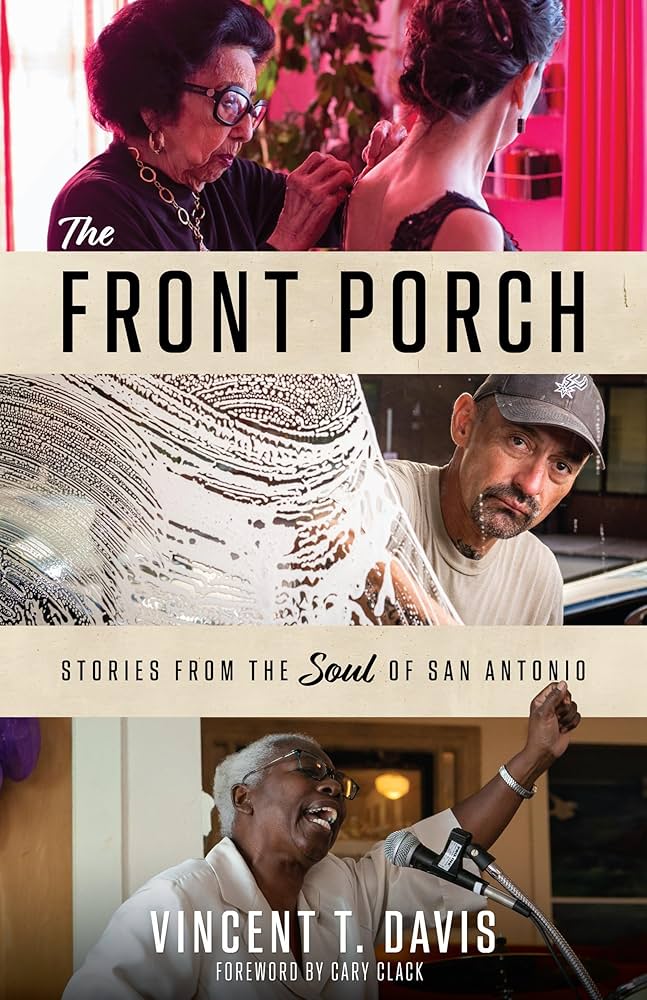
After speaking with Vincent T. Davis, author of The Front Porch: Stories from the Soul of San Antonio, I was reminded of the importance of storytelling. In Davis’s book, a collection of his columns from the San Antonio Express-News, readers are exposed to amazing people with incredible stories to tell.
People have recorded stories for centuries and have been telling stories for even longer. Today storytelling takes many forms, from novels and poetry to movies and videogames, but no matter the form, storytelling plays a vital role in human connectivity.
Although the importance of storytelling is obvious in Davis’s book, what makes a story and how it’s told, good or bad, is much harder to define. Similar to the debate about what makes something art, there are many answers. There seems to be a general consensus, however, that a “good” story has a few components, among them structure, setting, and characters.
Typically, structure is simply the beginning, middle, and end of a story, which often has a conflict, climax, and closure. Stories that lack these elements tend to fall short. Conversely, stories with a beginning that hooks readers and engaging sustaining action will often stand the test of time.
In oral storytelling, setting means more than just where the story takes place; it also means knowing what tone to take for the audience you are speaking to. For example, you probably wouldn’t subject your audience to a heart-wrenching account of a childhood memory during a celebration for a toddler’s second birthday.

Crafting a good setting means the artist successfully makes the audience feel that they have been transported into the world of the story. Davis’s story, “Quiet Time for Dad and Daughter” is a great example of a vibrant setting, making readers feel as though they are walking through a San Antonio park, right beside Davis.
We like to be led through our stories with characters we love, or love to hate. A story without characters is like a play without actors or a dinner without a chef. Characters are the heart of a story, which is why sharing stories, making art, and contributing to the shared story we all make is so important. It is also why The Front Porch, which overflows with other people’s stories, is a must-read.
So listen to Vincent Davis’ Tripod episosde, read The Front Porch, start journaling, and make some art to pass along, because stories make us who we are.
By Lily Brennan

 TRIPOD